Overview
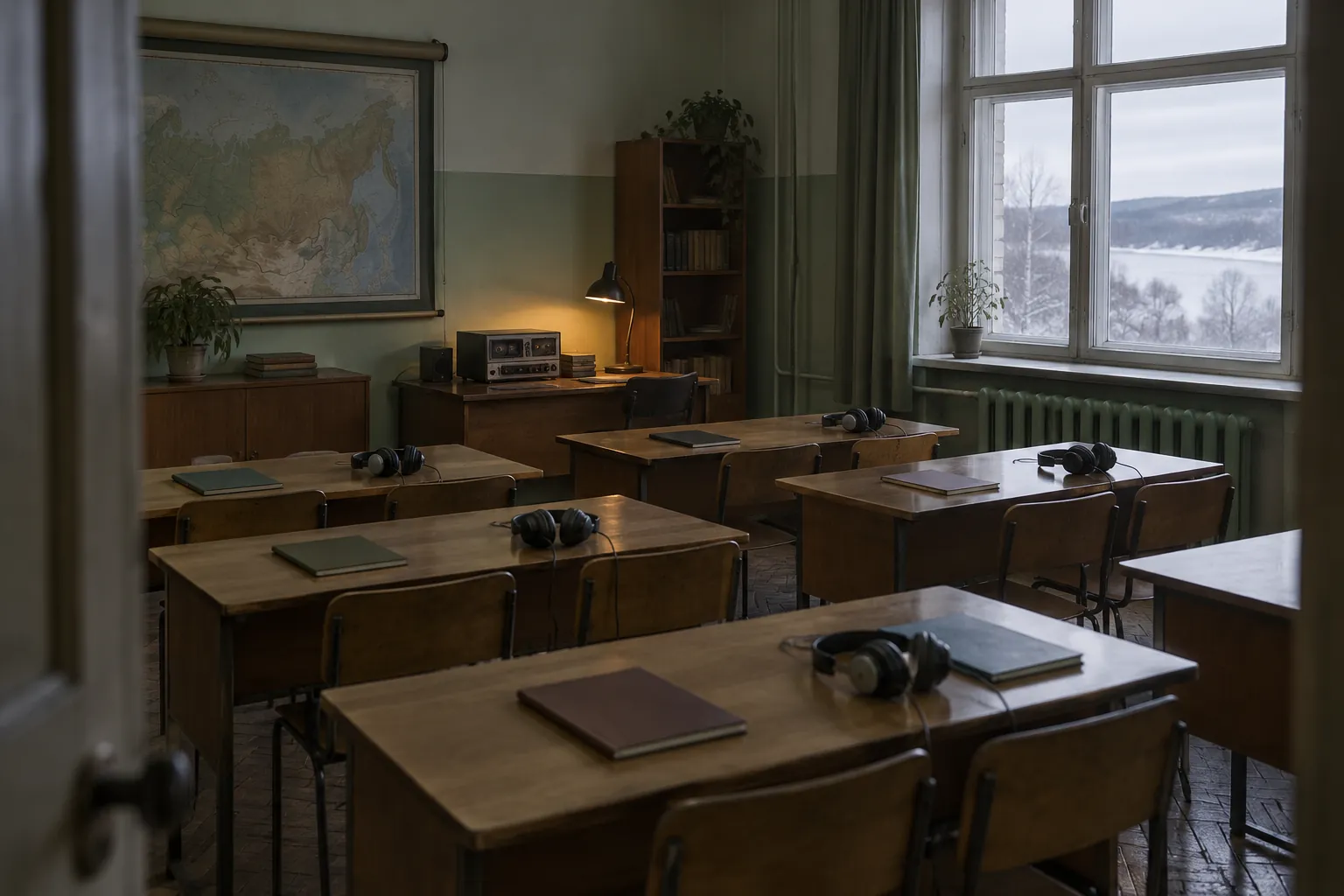
In 1994, a nineteen-year-old woman named Lena travels from Nizhny Novgorod to what she has been told is a language training programme in a former sanatorium outside Kazan. The facility is clean, the meals are regular, and the instructors are precise. Over nine months she learns that she has been recruited into something considerably more specific than language training.
The programme teaches cultivation: how to make a stranger trust you completely, how to maintain two registers of feeling simultaneously, how to lie with warmth, how to become whoever is needed in a given room. The instruction is delivered with the care of a craft being passed on by people who believe it matters. Some recruits wash out. Some graduate. Lena does both, in the sense that she passes every test and loses, in the passing, something she cannot name and will not recover.
The story is less about what Lena learns than about what the learning costs. The title refers to the two different laughs she has by the programme’s end — one that she means, and one that she has been trained to mean, and the growing difficulty of knowing which is which.